
What Should You Do If You Lose or Damage a Clear Aligner?
Clear aligners are designed to fit into everyday life, but trays can still get lost, cracked, warped, or damaged. A tray might be left in a restaurant napkin, chewed by a pet, warped by heat, or split during removal.
A lost or damaged clear aligner does not automatically mean your treatment needs to start over.
The safest first step is to contact the dental team managing your treatment. Do not decide on your own to skip ahead, return to an older tray, or repair the damaged aligner.
If the current tray is broken, sharp, distorted, or no longer fits safely, contact your dental team promptly for instructions about what to wear next.
If you are using clear aligners in Newport, MN, knowing what information to provide can help your dental team give you more useful guidance.
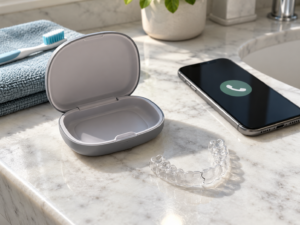
First, Determine What Happened to the Aligner
Not every aligner problem requires the same response.
Before contacting your dentist, identify whether the tray is:
- completely lost
- cracked but still in one piece
- split into separate pieces
- warped from heat
- bent or distorted
- rough or sharp along an edge
- no longer seating against one or more teeth
- damaged near an attachment
If you still have the tray, take clear photographs. Include one image of the entire aligner and a closer view of the damaged area.
Keep the tray and any broken pieces in a clean container or aligner case unless your dental team tells you they are no longer needed.
If an intact tray suddenly stops fitting, let your dentist know. The issue may involve tray seating, an attachment, tooth movement, or another treatment factor that needs evaluation.
Contact Your Treating Dental Team Promptly
Clear aligners are prescribed in a specific sequence.
Each tray is intended to guide particular movements before the next tray continues the plan. Changing that sequence without professional guidance may affect how the next aligner fits.
There is also no universal number of hours or days that every patient can safely go without an aligner. The appropriate next step depends on the treatment stage, tray fit, and individual plan.
Contact the office as soon as you know the aligner is missing or unusable.
When you reach out, be prepared to explain:
- whether the upper or lower aligner is affected
- the tray number or treatment stage
- how many days you have worn it
- whether it is lost, cracked, split, warped, or uncomfortable
- whether it still seats completely
- whether you have the previous and next trays
- whether an attachment appears to be missing
- whether you have pain, irritation, swelling, or a tooth injury
This information can help the dental team determine what needs to happen next.
Do Not Automatically Move to the Next Aligner
Opening the next package may seem reasonable, especially if you were already close to your scheduled tray change.
However, the next aligner is designed around the tooth movements expected from the current stage.
If those movements are incomplete, the next tray may feel unusually tight or fail to seat properly.
Your dentist may sometimes recommend moving forward, but that decision should be based on your treatment stage and how the next aligner fits.
Do not bite down aggressively or repeatedly try to force an aligner into place unless your dental team has given you specific seating instructions.
Do Not Return to an Older Tray Without Instructions
Going backward is not automatically the right solution either.
In some situations, the previous aligner may temporarily help maintain tooth position. In others, it may no longer fit appropriately because the teeth have already moved beyond that stage.
Contact your dental team before returning to an older tray.
Do Not Repair a Cracked Aligner at Home
Avoid using household glue, craft adhesive, tape, heat, or other materials to repair a clear aligner.
These substances may not be appropriate for use in the mouth, and an attempted repair can change the tray’s shape or fit.
Do not trim, file, polish, or reshape a damaged area unless your dental team specifically instructs you to do so.
Even a small change can affect how the aligner contacts the teeth or attachments.
What Might Your Dentist Recommend?
There is no single solution for every missing or damaged clear aligner.
After reviewing your situation, the dental team may recommend one of several options.
Continue With the Current Tray
A small defect may not always make an aligner unusable.
Your dentist may recommend continued wear after considering the damage, fit, and stability of the tray.
Do not assume that a cracked, sharp, or unstable aligner is safe to continue wearing.
Temporarily Wear the Previous Tray
The previous aligner may sometimes be used temporarily to help maintain tooth position.
Whether this is appropriate depends on where you are in treatment and whether the older tray still fits.
Advance to the Next Tray
If enough movement has already occurred and the next aligner fits as expected, your dentist may recommend moving forward in the sequence.
Do not skip ahead without professional guidance.
Order a Replacement Aligner
A replacement tray may be appropriate if the current treatment stage still needs additional time.
Replacement availability and timing depend on the aligner system and individual treatment plan.
Schedule an Examination or New Scan
An office visit may be needed if an attachment is missing, the teeth are not tracking as expected, or another tray does not fit.
A new scan may occasionally be recommended, but losing one aligner does not automatically mean the entire treatment series must be remade.
When Is a Damaged Aligner More Urgent?
A missing tray without pain can generally be handled by contacting the dental office for instructions.
Some situations deserve faster attention.
Contact the office promptly if:
- a sharp edge is cutting your cheek, tongue, or gums
- the tray is split and may break into smaller pieces
- you have significant pain, swelling, or bleeding
- a tooth feels loose
- the aligner was damaged during an injury to the mouth
- an attachment has come off or feels loose
- the current or next tray will not seat properly
If you have difficulty breathing or believe you inhaled a broken piece, seek emergency medical assistance.
If you think you swallowed a fragment but do not have breathing difficulty, contact an appropriate healthcare professional for guidance.
What If You Lose an Aligner While Traveling?
Being away from home does not mean you should guess what to do next.
Contact your dental team and provide the tray number, when you started wearing it, what happened, and which aligners you currently have with you.
Photos can also help if the tray is damaged rather than lost.
Before traveling, consider packing:
- your protective aligner case
- your previous and next trays, if provided
- the dental office’s contact information
- recommended cleaning supplies
Keep aligners in your carry-on bag rather than checked luggage when possible.
Avoid leaving trays in a hot vehicle or another place where heat could distort the plastic.
How Can You Prevent Lost or Damaged Aligners?
A consistent routine can prevent many common aligner problems.
Place aligners directly in their protective case whenever you remove them. Avoid wrapping them in napkins, leaving them loose in a pocket or bag, or placing them where pets or young children can reach them.
Remove aligners carefully with clean hands rather than pulling sharply from one area.
Follow your dentist’s instructions for cleaning and storage, and keep trays away from hot water, direct sunlight, and heated surfaces.
Unless your dental team has instructed otherwise, remove your aligners before eating.
It can also help to check their fit and condition each time you put them back in.
Understanding how clear aligners work can make it easier to see why tray order, fit, and wear instructions should not be changed without guidance.
Get Instructions for Your Specific Treatment Stage
A lost or damaged clear aligner requires an individualized answer rather than a universal shortcut.
Keep the tray and any damaged pieces if possible, note the tray number and how long you have worn it, and contact your treating dental team before making changes to the sequence or attempting a repair.
At The Smile Architects, we emphasize personalized treatment planning and clear communication throughout care.
If you need help with an aligner problem or want to discuss your treatment progress, book an appointment with The Smile Architects for guidance based on your current treatment plan.

Leave a Reply
You must be logged in to post a comment.