
Clear Aligners vs. Traditional Braces: Which Option Fits Your Lifestyle?
If you’ve been thinking about straightening your teeth, you’ve probably wondered whether clear aligners or traditional braces are the better choice. Both treatments are designed to improve tooth alignment and create healthier, more confident smiles, but they work differently and offer distinct advantages depending on your individual needs.
Choosing orthodontic treatment involves more than deciding how you want your smile to look. Your daily routine, oral health, treatment goals, and the complexity of your case all play an important role in determining which option is the best fit.
At The Smile Architects, no two treatment plans are exactly alike. Every recommendation is based on your oral health, smile goals, lifestyle, and the outcome you’re hoping to achieve. The first step is a consultation, where your dentist takes the time to understand your concerns, evaluate your smile, and recommend the treatment that best supports both your immediate goals and your long-term oral health.
Understanding Clear Aligners
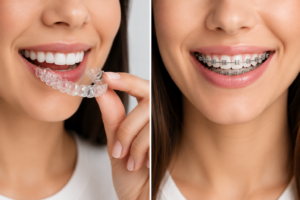
Clear aligners are a series of custom-made, removable trays that gradually guide teeth into their ideal positions over time.
Unlike traditional braces, clear aligners don’t use brackets or wires. Instead, patients wear a sequence of nearly invisible aligners that are replaced periodically throughout treatment as their teeth move into alignment.
Many patients choose clear aligners because they:
- Are discreet in appearance
- Can be removed for meals and beverages
- Make brushing and flossing easier
- Fit comfortably into professional and social settings
- Allow them to continue enjoying many of their favorite foods
Because aligners are removable, wearing them consistently as instructed is essential for helping treatment stay on track. During your consultation, your dentist will explain how clear aligners work and whether they’re an appropriate option for your smile.
Understanding Traditional Braces
Traditional braces use brackets and wires to apply gentle, continuous pressure that gradually moves teeth into better alignment.
Although braces have been used successfully for decades, today’s systems are smaller, more comfortable, and more efficient than many people expect.
Traditional braces may be recommended for patients with more complex alignment concerns or for individuals who would benefit from a fixed appliance that doesn’t rely on remembering to wear removable trays.
Like clear aligners, braces require routine visits so your dentist can monitor your progress and make adjustments throughout treatment.
Comparing Clear Aligners and Traditional Braces
Both treatment options are designed to create healthier, better-aligned smiles, but each offers unique advantages depending on your lifestyle and orthodontic needs.
Appearance
One of the most noticeable differences is visibility.
Clear aligners are designed to be discreet, making them a popular choice for adults and teens who prefer a less noticeable orthodontic treatment.
Traditional braces remain visible throughout treatment because brackets and wires stay attached to the teeth.
Daily Routine
Lifestyle is another important consideration.
Because clear aligners can be removed when eating, drinking anything besides water, brushing, and flossing, many patients appreciate the flexibility they provide.
Traditional braces remain in place throughout treatment, which means patients may need to avoid certain hard, sticky, or chewy foods while taking extra care to clean around brackets and wires.
Neither option is inherently better. Instead, the right choice depends on your daily habits, treatment goals, and willingness to follow your dentist’s recommendations.
Treatment Complexity
Some orthodontic concerns can be successfully treated with either option, while others may be better suited to one treatment than the other.
Your dentist will consider factors such as:
- Tooth alignment
- Bite relationship
- Crowding
- Spacing
- Overall treatment goals
- Long-term oral health
Understanding these differences provides a helpful foundation, but selecting the right treatment ultimately comes down to a personalized evaluation of your smile.
Choosing the Right Orthodontic Treatment
Understanding the differences between clear aligners and traditional braces is an important first step, but choosing the right treatment requires looking at your smile as a whole. Every patient has unique priorities, and the treatment that’s right for one person may not be the best fit for another.
During your consultation, your dentist will evaluate several factors, including:
- Your smile goals
- Tooth alignment and bite
- The complexity of tooth movement needed
- Your lifestyle and daily routine
- Your ability to wear removable aligners consistently
- Your overall oral health
After discussing your goals and completing a comprehensive evaluation, your dentist will recommend the orthodontic option that best supports your smile and long-term oral health. If you’d like to begin exploring your options before visiting the office, you can schedule a virtual consultation to discuss your concerns and learn more about your treatment possibilities.
How Straighter Teeth Can Support Long-Term Oral Health
Many people choose orthodontic treatment because they want a straighter smile, but the benefits often extend beyond appearance. Depending on your unique smile, properly aligned teeth may also:
- Make brushing and flossing more effective
- Reduce areas where plaque and food particles can accumulate
- Support healthier gums
- Improve bite function
- Boost confidence in your smile
While every patient’s experience is different, improving tooth alignment can make it easier to maintain good oral hygiene and support a healthier smile over time.
Tips for a Successful Orthodontic Journey
Whether you choose clear aligners or traditional braces, healthy habits play an important role in achieving the best possible results.
To help keep your treatment on track:
- Brush and floss thoroughly every day.
- Attend all scheduled dental appointments.
- Follow your dentist’s instructions carefully.
- Continue routine family dentistry visits and preventive care throughout treatment so your dentist can monitor your oral health while your teeth are being aligned.
- Wear your clear aligners for the recommended number of hours each day if they are part of your treatment plan.
- Reach out to your dental team if you have questions or notice any concerns during treatment.
Staying consistent with your care routine helps support both your orthodontic progress and your long-term oral health.
Personalized Care Starts with the Right Conversation
Choosing between clear aligners and traditional braces doesn’t have to feel overwhelming. Both treatments can be effective, but the right option depends on your smile, lifestyle, and long-term goals.
At The Smile Architects, we believe every patient deserves a treatment plan that’s tailored to their unique needs. By taking the time to understand your concerns and explain your options, our team helps you make confident, informed decisions about your oral health.
If you’re ready to explore your orthodontic options, contact The Smile Architects to schedule a consultation. We’re here to help you take the next step toward a healthier, more confident smile.
Frequently Asked Questions
Can clear aligners treat every orthodontic issue?
Clear aligners are an excellent option for many patients, but they aren’t the right solution for every orthodontic concern. The complexity of tooth movement, your bite, and your treatment goals all help determine whether clear aligners or traditional braces are the better choice.
Are clear aligners easier to keep clean than braces?
Because clear aligners can be removed, many patients find it easier to brush and floss normally during treatment. Traditional braces require extra care when cleaning around brackets and wires to help maintain healthy teeth and gums.
Can adults choose clear aligners instead of braces?
Yes. Many adults are good candidates for clear aligners. During your consultation, your dentist will evaluate your smile and recommend the treatment option that best fits your orthodontic needs and lifestyle.
Will I still need routine dental exams and cleanings during orthodontic treatment?
Absolutely. Continuing routine dental exams and cleanings throughout treatment helps keep your teeth and gums healthy while your smile is being aligned.
How long does orthodontic treatment usually take?
Treatment time varies depending on the complexity of your case, the type of treatment selected, and how closely you follow your dentist’s recommendations. Your dentist can provide a personalized estimate during your consultation.
How do I know which orthodontic treatment is right for me?
A consultation is the best place to start. Your dentist will evaluate your oral health, discuss your smile goals, and recommend the orthodontic treatment that best supports your needs, lifestyle, and long-term oral health.
Leave a Reply
You must be logged in to post a comment.